
Waking up with sore, achy hips can make it difficult to get comfortable, even after a full night's sleep. While hip pain at night can stem from a variety of factors, the amount of support your mattress provides, the way pressure is distributed, and the position you sleep in all influence how your hips feel by morning.
That’s why it's a good idea to pay attention to how your body feels after several hours in the same sleeping position. Those subtle changes often reveal more about your sleep surface than the first few minutes after you climb into bed.
Why Does Hip Pain Feel Worse at Night?
Why do my hips hurt when I sleep? Pressure on the hips, sleep position, and mattress support are all common contributors. Hip pain when sleeping often feels worse overnight than it does during the day. Everyday activities like walking, standing, and exercise give your hips regular breaks from prolonged pressure, something that happens far less often while you sleep. As a result, your hips remain under pressure for longer stretches, making it harder to stay comfortable.
Your sleep position also influences how your hips are supported and can contribute to neck pain. Without consistent support from your mattress, certain areas may absorb more force than others, contributing to discomfort that can linger throughout the night.
How Your Sleep Position Affects Hip Pressure
The way you sleep changes how your body rests against the mattress. Side, back, and stomach sleeping each place pressure on your hips differently.
Side Sleeper
Side sleeping places the most direct pressure on the hip closest to the mattress, making it one of the most common sleep positions associated with nighttime hip discomfort. A mattress that cushions pressure points while helping to keep your spine aligned can relieve excess pressure on the hips. It's also common for side sleepers to experience discomfort in the shoulder closest to the mattress. If that's the case, shoulder pain may stem from many of the same sleep-related factors.
Back Sleeper
Sleeping on your back distributes body weight more evenly, which may reduce direct pressure on the hips. Consistent support beneath your shoulders, hips, and lower back helps keep your spine in a more neutral position throughout the night.
Stomach Sleeper
Stomach sleeping may reduce direct pressure on the hips, but it can place added stress on the lower back and pelvis by pulling the spine out of alignment. A supportive mattress can help maintain proper spinal alignment, reducing unnecessary strain while you sleep.
Can Your Mattress Be Causing Hip Pain?
It can. If you've started waking up with sore hips but nothing else in your routine has really changed, your mattress is worth a closer look. Over time, nightly use can change how a mattress feels, and the comfort that worked well before may no longer provide the same experience.
A Mattress That No Longer Matches Your Needs
A mattress doesn't have to be worn out to stop being the right fit. Significant body changes, an injury, pregnancy, changes to your daily routine, or even a different sleep style can all influence what feels best in bed. If it no longer feels like the right fit, you may start waking up with aches that weren't there before. Signs you've outgrown your mattress often appear gradually, making it difficult to pinpoint exactly when things changed.
What Pressure Relief Really Means
After several hours in the same position, it's normal for certain parts of your body to bear more force than others. Your hips are one of the most common examples, especially if you're a side sleeper. When that force stays concentrated in one place for too long, it's much harder to stay comfortable through the night.
A mattress for pressure relief spreads that force across more of the bed instead of leaving your hips to absorb most of it. The result is a sleep experience that feels more even from head to toe, with fewer sore spots when you wake up.
Features to Look for in a Mattress if You Have Hip Pain
Firmness ratings are a starting point, but they don't capture everything that contributes to a good night's sleep. The materials, design, and durability of a mattress all shape how it performs after hours in the same position.
- Firmness that matches your sleep style: The best mattress for hip pain isn't the same for everyone. Many of the same considerations apply when choosing a mattress for back pain, where sleep position, body type and personal comfort preferences also influence the right fit. Side sleepers often prefer more cushioning around the hips and shoulders, while back and stomach sleepers typically benefit from a firmer feel. Sleeping on your stomach places different demands on a mattress than sleeping on your back or side, making sleep position an important part of the decision.
- Pressure relief: If hip pain while sleeping has become a regular frustration, a mattress for pressure relief spreads force across more of the bed instead of leaving your hips to absorb most of it.
- Durable materials: Materials naturally soften with years of regular use. Durable construction helps a mattress maintain a more consistent feel, making hip pain less likely. Your mattress needs can also change over time, making it worth reassessing whether your current mattress is still the right fit. Durable construction helps a mattress maintain a more consistent feel, making hip pain from a mattress wear less likely.
Choosing the Right Sleeper for Your Comfort Needs
Every sleeper brings different comfort needs to bed. Big Fig offers mattress options built to meet them.
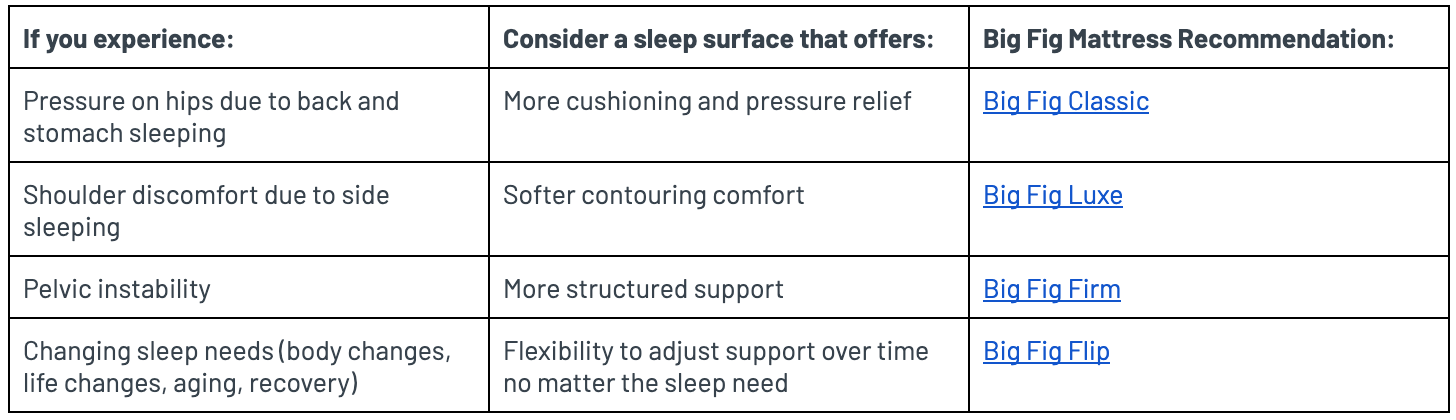
Still deciding which Big Fig mattress is right for you? Take the Big Fig Mattress Quiz for a personalized recommendation based on your sleep style, comfort preferences, and support needs.
How Big Fig Supports Different Comfort Preferences
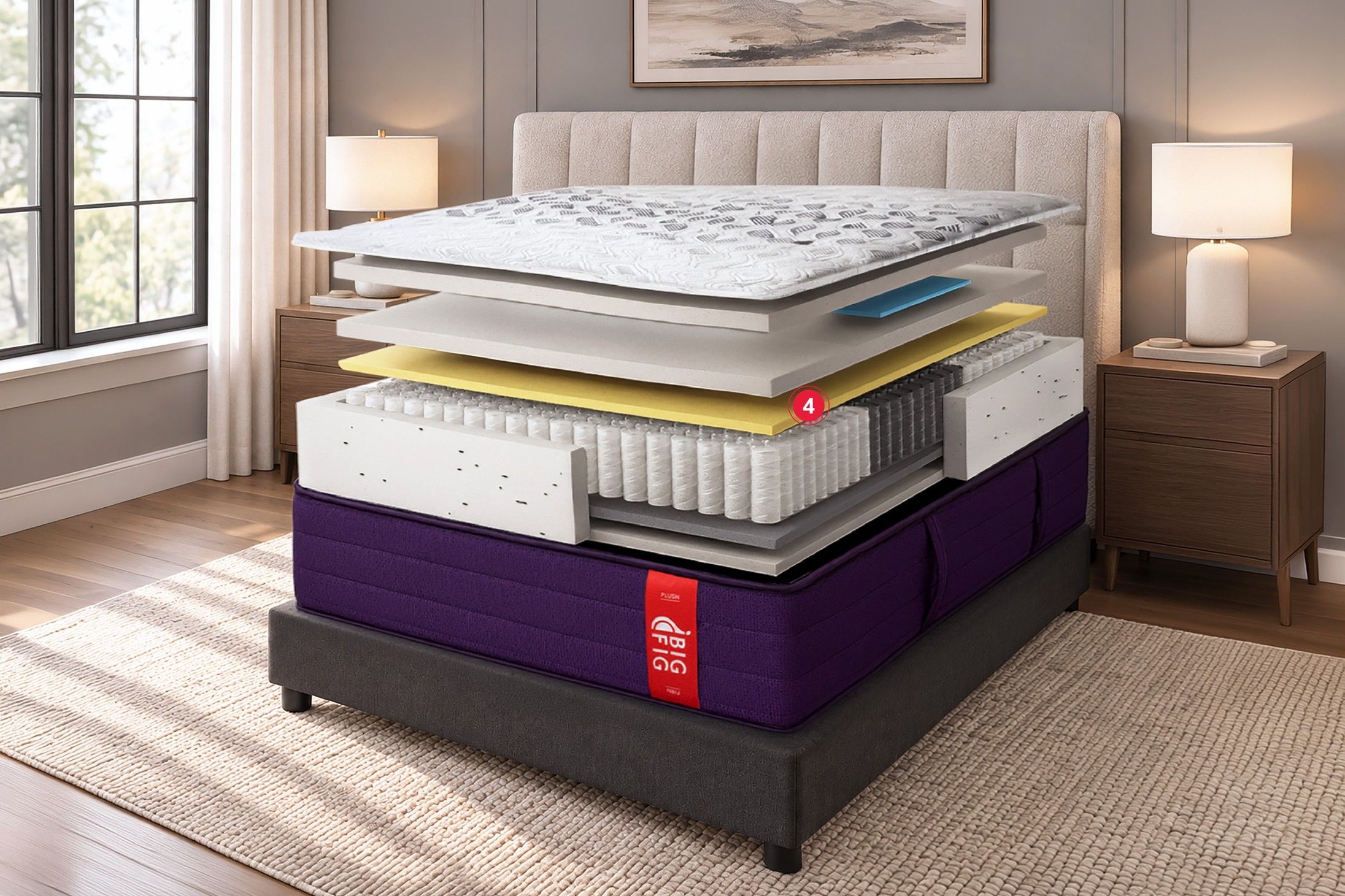
Big Fig's flippable mattress was created around the idea that changes in your sleep needs may not stay exactly the same over time. A flippable mattress gives you two distinct sleep experiences in one design, making it possible to choose the sleep surface that feels best as your body and sleep preferences evolve.
The plush relief side provides additional cushioning and pressure relief, while the firm side offers a sturdier, more supportive feel. Together, they give you another sleep experience without sacrificing the durability, cooling performance, and craftsmanship that define every Big Fig mattress.
Your Body changes over time, and so does Life - your mattress should be able to keep up. Shop the Big Fig Flip to discover how two distinct sleep experiences in one durable design can help you stay comfortable as your needs change.