

Can a Firmer Mattress Help Joint Pain?
Joint pain has a way of making itself known the moment you lie down, and again when you try to get up. Whether it shows up in your hips, knees, shoulders, or lower back, nighttime discomfort often comes down to how well your mattress holds up while you rest.
If you’ve ever wondered whether a firmer mattress can help with joint pain, the short answer is yes — that is, when it’s built to carry more weight without losing structure. Fun fact: firmness alone isn’t the fix. What matters is how consistently a mattress supports your body, keeps alignment steady, and holds its shape over time. That combination is crucial for full-figured bodies, where uneven compression becomes more apparent.
Here’s how those pieces work together, including what to look for in a mattress that doesn’t leave your joints doing the extra work overnight.
How Your Mattress Impacts Joint Pain
Your joints don’t work alone. They’re part of a connected system that includes your spine, muscles, and connective tissue. When one area drops out of alignment, the rest of your body compensates, and that’s where pain tends to build.
How can you tell when a mattress isn’t designed to support more weight? You’ll most likely notice the difference in how your joints feel. Softer beds compress too deeply under the hips and shoulders, throwing alignment off and increasing pressure on knees, lower back, and surrounding joints. Over time, that nightly strain adds up.
Relief starts with how evenly your mattress supports your body. Finding the best position to sleep only helps if the mattress underneath you can maintain that position instead of sagging.
What a Firmer Mattress Does Differently
A firmer mattress doesn’t mean it feels uncomfortable or unforgiving. When constructed correctly, firmness creates a stable foundation that keeps your body aligned and supported. Still not exactly sure what to look for? We’ve got you.
Body Support
If your mattress isn’t designed to handle heavier weight, you’ll likely feel unevenness on the surface — long before you have that morning cup of Joe. Why? Softer foams tend to compress faster under heavier bodies, creating low spots that throw everything off balance.
A firmer mattress helps prevent that uneven sink, keeping the weight of your fab bod distributed more evenly across your bed. Remember, the focus on durability and structure, which is why a firmer, well-made model is often considered the best bed for joint pain, especially when your body needs more from the surface underneath it.
Steady support makes a difference at the hips, knees, and shoulders—areas that already carry more load while you sleep. A stable surface also makes nighttime movement easier, so shifting positions doesn’t feel like a workout or leave you fighting the mattress to get comfortable.
No surprise, searches for a mattress for joint pain often circle back to a sturdier sleep surface. Mattresses that hold their shape longer give your body a break instead of adding more strain.
Natural Spinal Alignment
Your spine sets the tone for how your joints feel. When it falls out of alignment, stress travels outward to your hips, knees, shoulders, and neck.
Maintaining alignment requires a mattress firm enough to prevent your midsection from sinking too deeply. A firmer surface helps keep the spine neutral, reducing uneven pressure that can aggravate joints overnight. These small yet significant details matter even more when joint pain overlaps with neck or shoulder discomfort, which is typically tied to poor alignment rather than the joints themselves. Addressing neck pain from sleeping frequently starts with fixing what’s happening underneath your body, not just at the pillow.
Is a Firmer Mattress the Best for Joint Pain?
Extreme firmness is not always the goal — your choice depends upon whether your mattress can stay consistent under real weight, regardless of size. When a mattress compresses unevenly, alignment shifts and pressure builds where your body already works hardest. That’s when joint discomfort tends to show up, even if the mattress initially felt comfortable.
Sleep position still plays a role. Side sleeping places more demand on hips and shoulders, which need cushioning without collapse. On the other hand, back sleeping benefits from a firmer, more stable surface that keeps the spine from dipping under weight.
When nerve-related pain enters the picture, consistency should be top of mind. For example, learning how to sleep with sciatica often goes hand in hand with switching to a mattress that stays steady through the night instead of softening where your big body needs more support.
In short, the goal isn’t “as firm as possible.” Instead, firm enough to keep your body aligned, supported, and comfortable all night long.
How to Choose the Best Mattress for Joint Pain
If joint pain is part of the picture, back discomfort usually isn’t far behind. What defines the best bed for joint pain often overlaps with the best mattress for back pain, especially when your body needs more structure to stay aligned through the night.
Durable, High-Density Materials
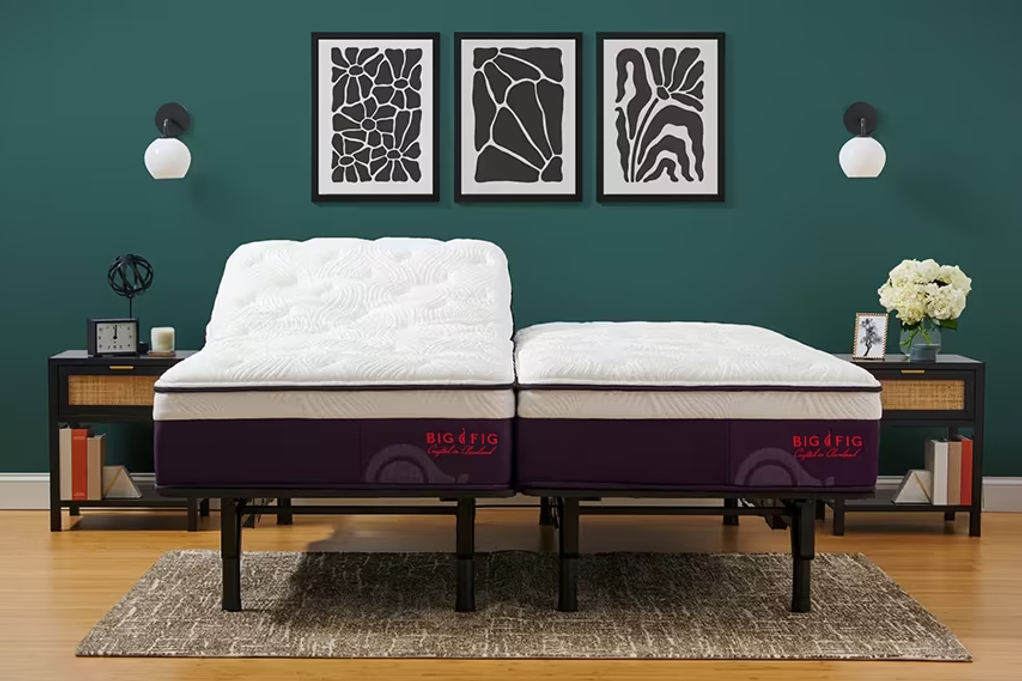
Joint relief depends on stability over time. The Big Fig Mattress uses high-density foams and a reinforced support core designed to resist sagging under higher weights. This durability helps prevent the uneven compression that often places additional strain on the hips, knees, and shoulders as mattresses soften.
Zoned and Reinforced Support Where it Matters Most
Extra reinforcement through the center of the Big Fig Mattress helps keep the spine properly aligned, reducing pressure through the hips and knees. This targeted support is essential when joint pain overlaps with lower back discomfort, since alignment issues tend to compound overnight.
Pressure Relief Without Collapse
Comfort layers should cushion sensitive joints without letting your body sink too deeply. Our durable foam layers are engineered to provide cozy comfort while maintaining structural support underneath, so pressure is distributed evenly rather than concentrating at the joints.
Edge and Surface Stability
A stable sleep surface makes it easier to reposition and get in and out of bed, which really matters when stiffness is part of your morning (or night!) routine. With reinforced edges and a strong coil system, the Big Fig Mattress offers consistent support across the entire surface, not just the center.
When Firmness Works
The bottom line? A firmer sleep surface can make a significant difference. When materials soften or sag, that strain shifts back onto you instead of being absorbed. Reinforced design and long-lasting components help everything stay consistent over time. And when materials break down, your body feels it. Durability is what defines a mattress our full-figured bod is worth sleeping on.
Say “good-bye” to joint pain. Explore Big Fig Mattresses that work as hard as your body does, day after day!